The Real Cost of AI Coding Tools: A TRAE Credit Usage Breakdown
A reader commented that TRAE’s switch from flat-rate billing to credit-based billing made costs 25x higher. Since the article they commented on was itself generated using TRAE-Work, I checked the actual backend billing records. The result: more expensive than before, but nowhere near 25x.
Blog Generation: 210.55 Credits (¥4.68)
The article was produced through a 5-step AI Skill pipeline (first 4 have credit consumption, step 5 is publishing), each step with an independent credit record:
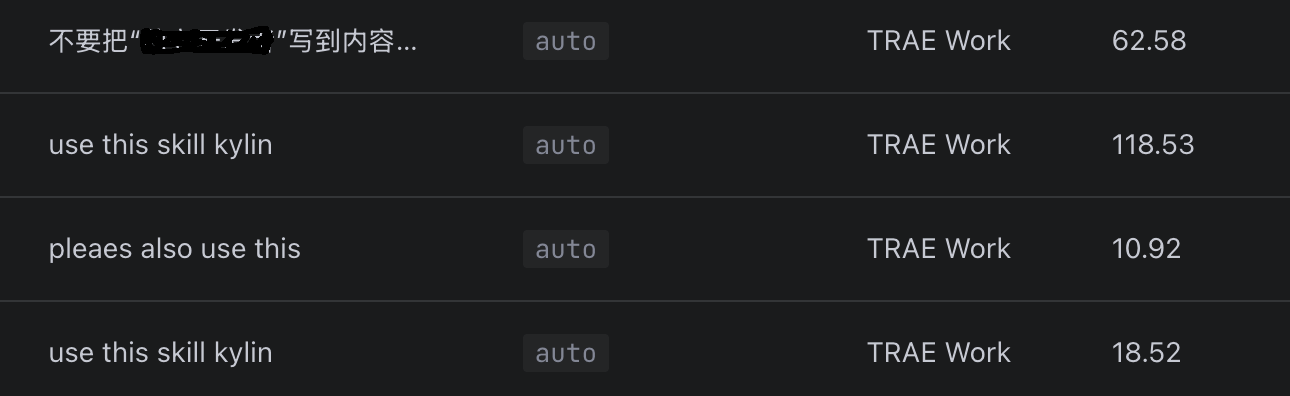
| Step | Operation | Credits | % of total |
|---|---|---|---|
| 1 | AI Skill generates draft from brief | 18.52 | 8.8% |
| 2 | Fetch 2 images for AI reference | 10.92 | 5.2% |
| 3 | Generate 12 platform-specific versions | 118.53 | 56.3% |
| 4 | AI revises to remove a keyword | 62.58 | 29.7% |
| 5 | Publish to all platforms using FaXia tool | 0 (tool usage, no credits) | 0% |
| Total | 210.55 | 100% |
Pro plan: ¥89 for 4,000 credits. This article cost: (62.58 + 118.53 + 10.92 + 18.52) / 4000 * 89 = ¥4.68.
Multi-platform generation (step 3) consumed 56% of all credits — generating 12 platform-adapted versions in one pass means the AI processes 12 different style guides and produces 12 separate outputs.
Coding Task: 298.71 Credits (¥6.65)
As a comparison, I completed a Flutter cross-platform app enhancement: architecture documentation review, data structure refactoring (extracting richer fields from OCR output), manual editing features, and UI optimization for inter-page navigation.
The AI split this into 13 sub-tasks:
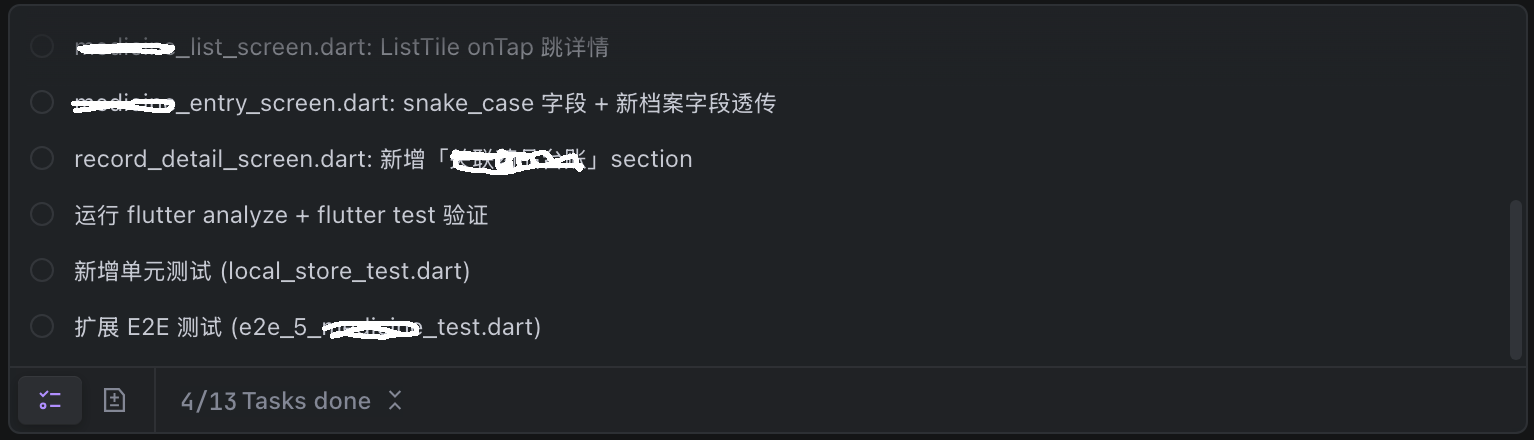
An E2E test regression consumed significant debugging time. After investigation, it was confirmed as a pre-existing latent bug — not introduced by the changes. Further analysis revealed it was a hidden issue that could cause instability.
56 minutes, 1 API call, 298.71 credits total:
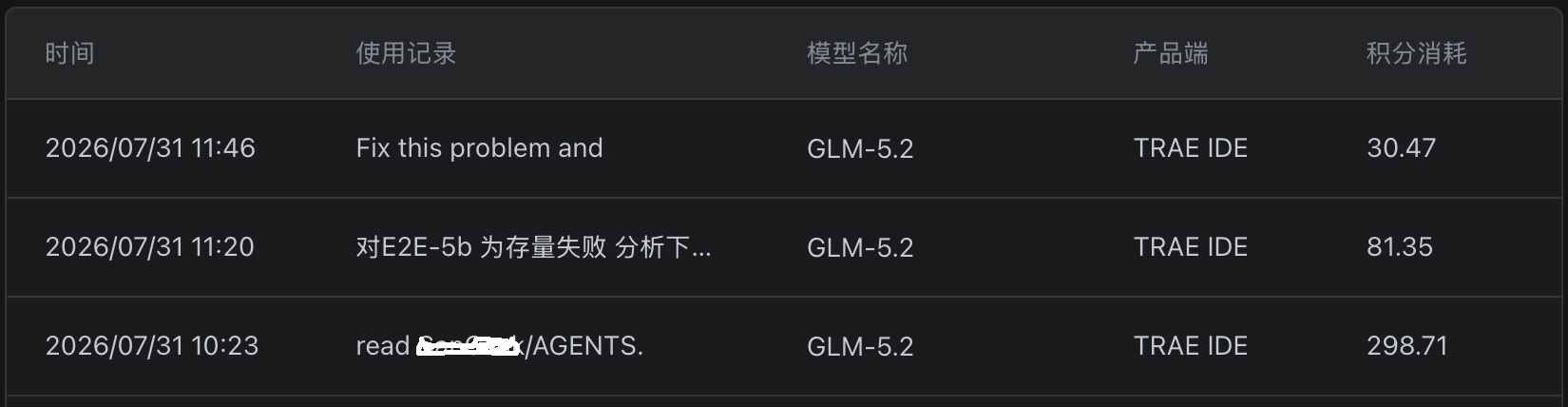
Cost: 298.71 / 4000 * 89 = ¥6.65.
Cost Comparison
| Metric | Blog generation | Coding task |
|---|---|---|
| Total credits | 210.55 | 298.71 |
| Cost (¥) | 4.68 | 6.65 |
| % of monthly quota | 5.3% | 7.5% |
| API calls | 4 | 1 |
A 4,000-credit monthly plan covers approximately 19 blog posts or 13 coding tasks. Light users will be fine; heavy daily coders may exhaust their quota in two weeks.
Is It Really 25x?
I cannot verify the exact multiplier. The old speed-pass plan also had costs, but after the billing change the backend data is gone, so it’s unclear exactly how much — but overall, costs definitely increased. But subjectively, the new billing feels noticeably more expensive.
25x might be an extreme case from a very heavy user. But the direction is correct: it’s more expensive. TRAE’s recent 6,000 free credits for existing users likely signals awareness that pricing needs adjustment.
Key Takeaways
- Credit billing brings cost transparency — every operation is traceable, which flat-rate plans couldn’t offer. But transparency ≠ affordability.
- Coding tasks need careful quota planning — heavy coding users should carefully evaluate monthly quota adequacy.
- The pricing will likely adjust — use the current window to compare alternatives and track real usage patterns.
I’m not renewing TRAE this month and have subscribed to Qoder Pro for a side-by-side comparison. Every tool expense needs a clear ROI calculation — and you can’t calculate ROI without knowing the real cost.
If you’re using credit-billed AI tools, check your usage logs. Calculate the real per-task cost. “Feels expensive” and “is expensive” are different things — and the difference matters when choosing a long-term tool subscription.