TRAE’s Second 6,000-Credit Giveaway: What Compensation Patterns Reveal About AI Tool Pricing
Two rounds of “legacy user benefits” later, the compensation strategy says more about AI tool pricing than any public announcement could.
What Happened
After two days without opening TRAE, I launched it today to fix a bug — and my credit balance was significantly higher than expected. Another 6,000 credits, labeled “Legacy User Benefit,” expiring September 3rd.
This is the second round. TRAE already sent 6,000 credits to existing Pro subscribers when they switched from flat-rate to per-use billing last month. Two rounds, 12,000 credits total.
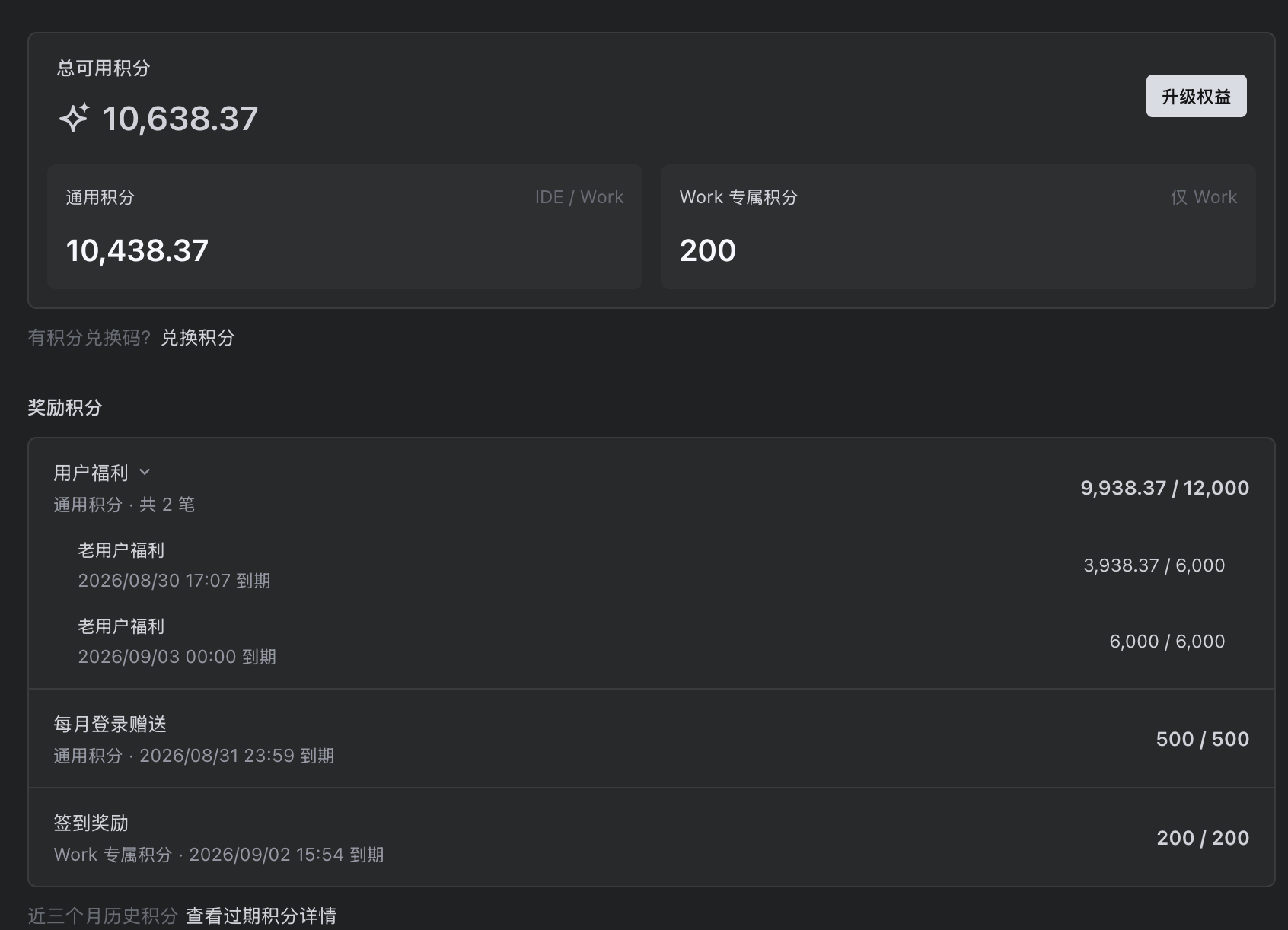
I’d predicted this pattern. When the first round dropped, I wrote that it was part of a pricing optimization cycle: the initial credit consumption rates were too aggressive, and the platform needed a bridge period to recalibrate while retaining users. The second round confirms and amplifies that analysis.
The Credit Pool Breakdown
| Item | Type | Remaining | Expires |
|---|---|---|---|
| Legacy benefit (Round 1) | General | 3,938 / 6,000 | Aug 30, 2026 |
| Legacy benefit (Round 2) | General | 6,000 / 6,000 | Sep 3, 2026 |
| Monthly login | General | 500 / 500 | Aug 31, 2026 |
| Check-in reward | Work-only | 200 / 200 | Sep 2, 2026 |
Total available: 10,638 credits (10,438 general + 200 work-only).
Three structural details stand out:
- Consistent pattern: Same amount (6,000), same label, similar expiration logic across both rounds. This is a deliberate recurring strategy, not a random promotion.
- Intentional expiration windows: Round 1 expires Aug 30, Round 2 expires Sep 3. Together they bracket the month boundary, signaling “the tuning should be complete by early September.”
- Scale dwarfs regular benefits: Monthly login = 500, check-in = 200. A single legacy benefit = 6,000. This is a pricing correction, not an engagement tactic.
Real Cost Data Under the New System
For context, my actual costs from the previous billing period:
| Task | Credits | Approx. Cost (Pro) |
|---|---|---|
| Multi-platform blog post (12 versions) | 210.55 | ~$0.65 |
| Flutter feature (13 subtasks + debugging) | 298.71 | ~$0.93 |
These numbers aren’t extreme in isolation. But compared to the old flat-rate model, per-task costs are noticeably higher. The compensation rounds are the platform’s acknowledgment — delivered not in words, but in credits.
Three Key Judgments
1. The pricing model is being actively tuned
Two rounds of 6,000-credit compensation, targeting the same user segment with synchronized expiration dates, confirms this is systematic pricing optimization, not ad-hoc promotion.
2. Compensation is an implicit signal
Platforms don’t give away credits at this scale — twice — unless they know users feel the new pricing hurts. The compensation is a tacit admission that per-task costs need recalibration.
3. Don’t commit during the compensation window
Every credit spent now reflects subsidized pricing. I need post-compensation data — the steady-state numbers that will determine long-term viability. Making a subscription decision based on distorted costs is how you get surprised by a bill.
Why I’m Not Renewing This Month
The data is distorted. 12,000 credits of free money skews any per-task cost calculation. The number I’ll pay in October won’t include these subsidies.
The window is a retention mechanism. Two rounds with synchronized expirations — the platform wants you inside the ecosystem when final pricing lands. I can choose to decide after the window closes.
Parallel comparison is ongoing. Last month: TRAE Pro. This month: Qoder Pro. Two variables need to converge before I commit to either.
Observation Timeline
| Date | Signal to Watch |
|---|---|
| By Aug 30 | Round 1 expires. Third round, or end of compensation? |
| By Sep 3 | Round 2 expires. New regular benefit structure? |
| Early Sep | Final decision: TRAE vs Qoder vs DeepSeek combo |
Conclusion
TRAE’s two-round compensation pattern (12,000 credits total) confirms three things: AI tool pricing is still being actively tuned; compensation rounds are implicit signals of user cost sensitivity; and the smart move during pricing transitions is to wait for steady-state data before committing.
If you’re using credit-based AI tools, check your balance history and calculate your real per-task costs — not the subsidized version. The platforms are iterating on pricing in public. Make your subscription decisions with eyes wide open.