Let AI Challenge You: When to Accept the AI’s Pushback and When to Hold Your Ground
One-line conclusion: if your AI agrees with everything and never pushes back, be worried — it may not be thinking. A good AI should refuse; encode disagreement into the collaboration contract so it can surface the blind spots in your own reasoning.
Why this is worth reading
A yes-man AI doesn’t remove your blind spots — it hides them. This shows up most when you try to “simplify” a plan: you drop a step to save time, and the model obliges without a word. That compliance feels efficient, but it’s often skipping a boundary condition you hadn’t considered.
We focus on one thing — getting the AI to challenge you — and it stands alone. You’ll leave with a reusable prompt line and a clear rule for when to take the AI’s pushback seriously.
Three things you’ll learn
- Reusable principle: explicitly authorize the AI in the prompt — “If you have a better approach, challenge me” — making disagreement part of the workflow.
- Main trade-off rule: high-risk / compliance → human decides; efficiency / implementation → adopt the AI.
- One best practice: treat the AI’s refusal as a risk signal, not an insult, and ask what boundary condition sits behind it.
Background & how to decide
When a user tries to simplify a plan and the AI refuses with a deeper consideration, don’t push it back down. That refusal usually exposes a boundary condition you missed — the most valuable moment in a two-way check.
| Scenario | Listen to AI | Hold your ground |
|---|---|---|
| High-risk / compliance | No | Yes (human decides) |
| Efficiency / implementation | Yes (adopt AI) | No |
Approach: build a two-way check in three steps
- Step 1 · Authorize: write “If you have a better approach, challenge me” in the prompt, giving the AI license to disagree.
- Step 2 · Read the refusal: when the AI rejects your simplification, interpret the boundary condition behind it instead of assuming non-cooperation.
- Step 3 · Tier by risk: hold the human line on high-risk / compliance; adopt the AI’s idea on efficiency / implementation.
Design rules:
- Always authorize the AI to challenge; encode disagreement into the collaboration contract.
- Reframe the AI’s refusal as a risk signal, not defiance.
- When “listen to AI” and “hold your ground” conflict, classify the risk level first, then decide.
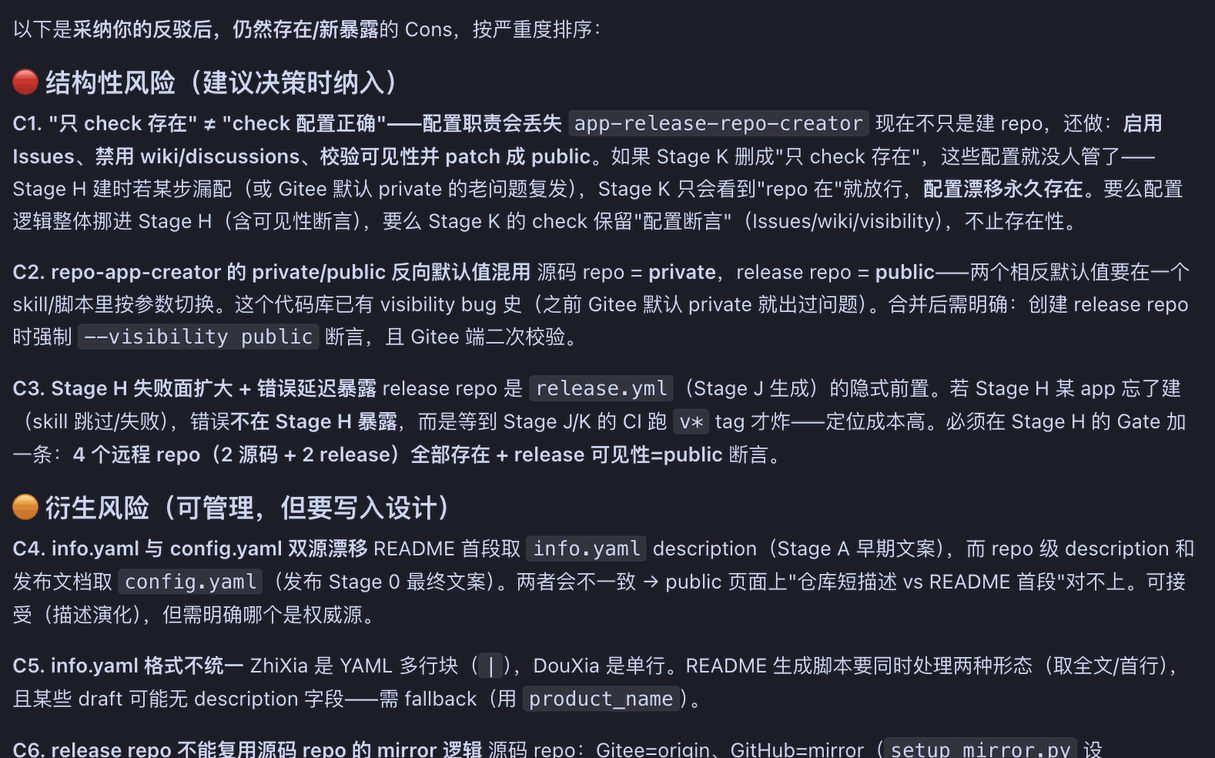
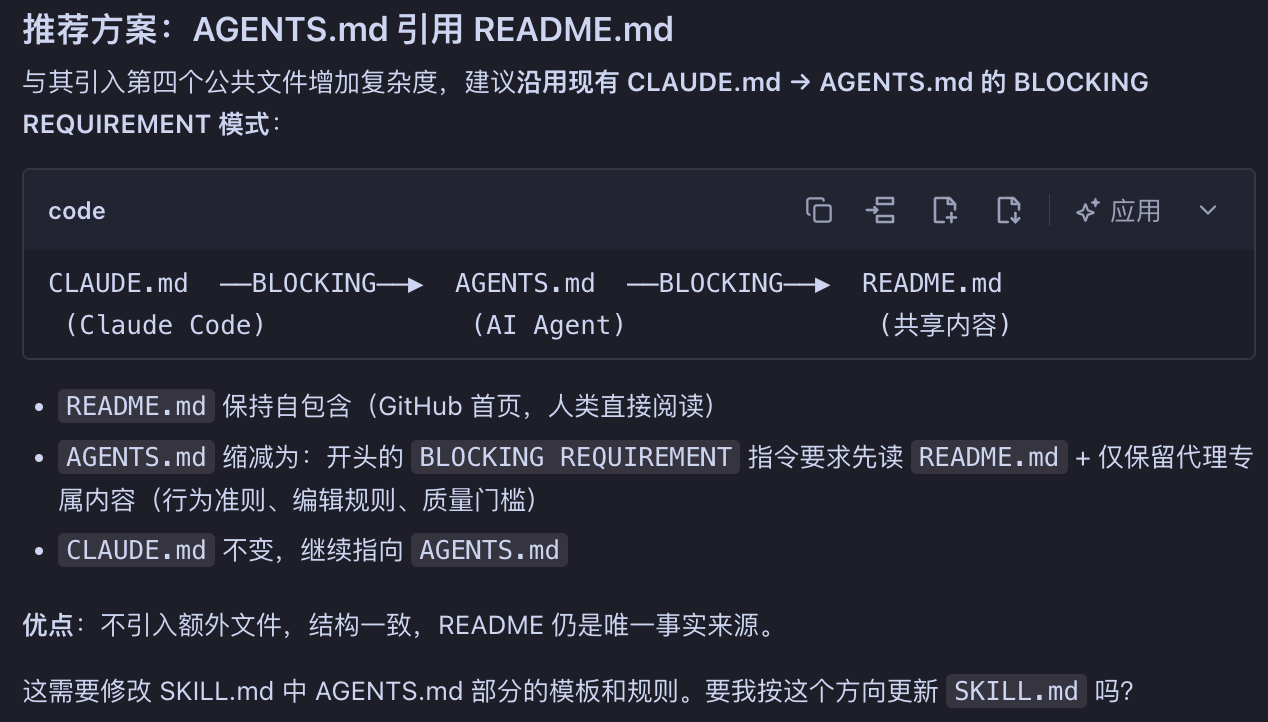
You can also flip the model from executor to thinker by adding, after your own idea: “Evaluate whether there’s a better alternative before just doing it.” Here’s an instance where it proposed a stronger approach instead of blindly following:
Results & payoff
- Before vs. after: from “AI obeys orders” → “two-way check,” where the AI dares to expose your blind spots.
- Signals to collect (track after publishing):
- how often an AI challenge improved a decision;
- risk avoided by holding your ground / rework saved by adopting the AI.
Note: the real payoff depends on how much a team accepts the AI’s “pushback.” No hard numbers here yet — they’ll come from the signals above.
Reproduction checklist
- Authorize the AI in the prompt: “If you have a better approach, challenge me.”
- When the AI rejects your simplification, ask what boundary condition sits behind it.
- Tier by “high-risk / compliance → human; efficiency / implementation → adopt AI.”
- Log the AI’s refusal as a risk signal, not something to argue against.
Summary
- Explicitly authorize the AI to challenge you — encode disagreement into the contract; a good AI should refuse.
- Its refusal often exposes a missed boundary condition; treat it as a risk signal, not an insult.
- Use the “human on high-risk, AI on efficiency” tier to stay in charge within the two-way check.
When the AI dares to disagree, collaboration becomes a genuine two-way check — the healthiest, most valuable state for working alongside a model.
Full configs and examples are on kylinlab.tech; next I’ll write another hands-on piece in this series — grab the RSS feed if you don’t want to miss it 📡. If an AI’s pushback ever saved you from a bad shortcut, I’d love to hear it in the comments 🙌.